
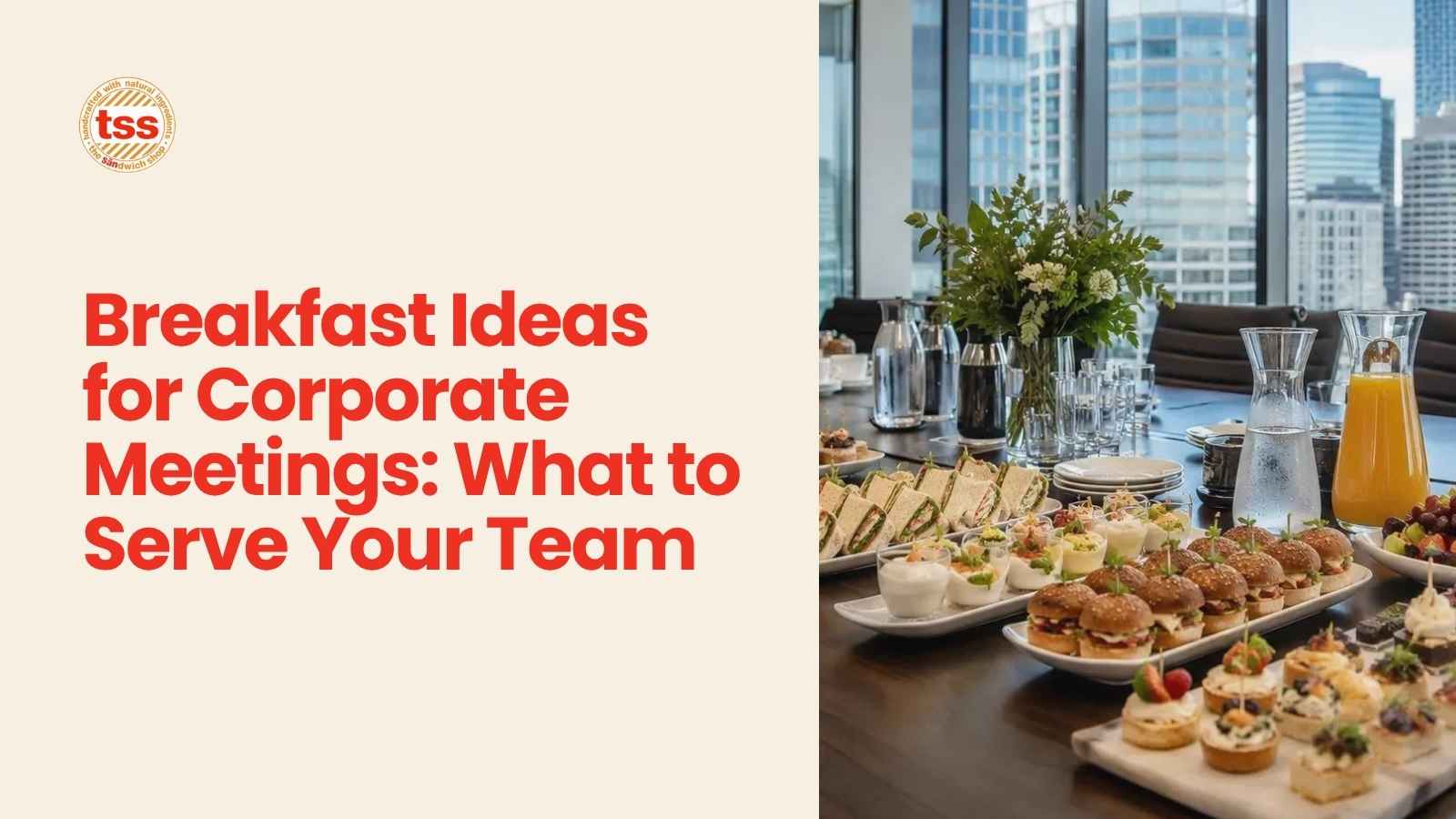
A corporate breakfast needs to do more than provide food before the workday begins. It should help people settle in, give them enough energy for the morning and fit naturally into the meeting schedule.
The best breakfast ideas for corporate meetings are usually simple, familiar and easy to manage. A short briefing may only need pastries, fruit and drinks, while a longer workshop could call for sandwiches, protein-rich foods and more substantial portions.
The key is to choose breakfast based on how the meeting will run, rather than ordering a large selection of food simply for variety.
Start With the Type of Meeting
The meeting itself should determine the breakfast format.
For an early internal briefing, guests may only have a few minutes to eat before the discussion begins. Individual portions and easy-to-handle foods are therefore more practical than a full buffet.
A longer workshop gives you more flexibility. With a dedicated breakfast break, attendees can step away from their desks and enjoy a wider selection.
Client meetings require another approach. The food should be neat, presentable and easy to eat without distracting from the conversation.
Think about:
- How long the meeting will last
- Whether breakfast replaces a full meal
- When attendees will have time to eat
- Whether people will eat in the meeting room
- How much serving space is available
Once these details are clear, choosing the menu becomes much easier.
Make Sandwiches Part of the Main Selection
Sandwiches are a practical choice when you need breakfast that is more filling than pastries but still easy to serve.
You can prepare them in individual portions or arrange them on shared platters, depending on the meeting format. Different fillings also give attendees choice without requiring a completely separate meal for everyone.
For Singapore businesses, The Sandwich Shop offers sandwiches, wraps and baguettes that can be incorporated into a corporate breakfast spread.
If the meeting begins early, having the food ready before attendees arrive can also make the start of the session smoother. People can grab something to eat without creating a queue once the presentation begins.
Add Fresh Options for Variety
A breakfast table can quickly become dominated by bread and pastries. Fresh fruit offers a lighter alternative and adds variety without complicated prep.
Choose fruit that is easy to serve and eat, such as grapes, berries, melon or prepared fruit portions. Place these on a shared platter or serve them individually.
For a broader approach to balanced meals, Singapore’s Health Promotion Board recommends the My Healthy Plate, which uses wholegrains, protein and fruit and vegetables as the main components of a balanced meal.
You do not need to turn a corporate breakfast into a nutrition lesson. Simply including fresh options alongside more indulgent breakfast foods gives people greater choice.
Include Protein for Longer Mornings
Pastries and fruit may work for a short meeting, but attendees sitting through a three-hour workshop may need something more substantial.
Protein-containing foods can make the breakfast feel more complete. Depending on the menu, options can include eggs, yoghurt, cheese, nuts, beans or suitable meat fillings.
You can also combine protein with familiar breakfast foods rather than creating a separate protein-focused station. For example, an egg or cheese sandwich can sit alongside fruit and a pastry, giving attendees different ways to build their breakfast.
The goal isn’t to make every item highly nutritious. It is to create enough variety that attendees can choose a combination that suits their appetite and the length of the session.
Keep Pastries as Part of the Experience
Pastries still have a place on a corporate breakfast table.
Croissants, muffins, and other baked items are familiar, easy to portion, and particularly suitable for early meetings when attendees may want something small with their coffee.
The important thing is not to make pastries the only option. Pairing them with sandwiches, fruit and drinks creates a more flexible spread.
This is especially useful when a group has different eating habits. Some attendees may want a full breakfast, while others may simply take a pastry and coffee before the meeting begins.
Consider Individual Breakfast Boxes
Individual breakfast boxes can make sense when attendees arrive at different times or when the meeting needs to start promptly.
A box can bring several components together, such as a sandwich or bread item, fruit and a drink. Because the food is pre-portioned, organisers don’t need to manage a shared buffet during the busiest part of the morning.
This format also works well when attendees are moving between rooms or when table space is limited.
However, individual boxes are not always necessary. For a smaller meeting where everyone eats at the same time, shared platters may be simpler and create a more relaxed atmosphere.
Give People Different Choices
A corporate breakfast does not need dozens of menu items. It needs enough variety to accommodate different preferences.
For example, you could combine:
- A substantial option such as sandwiches or wraps
- A lighter option such as fruit
- A baked item such as a croissant or muffin
- Coffee, tea and water
This creates a clear selection without overwhelming the organiser or attendees.
Consider dietary requirements before ordering. Ask about vegetarian requirements and food allergies in advance, then confirm ingredients and preparation details with the caterer rather than relying on assumptions.
Clear labels can make the final setup easier to navigate, especially when several sandwiches or pastries look similar.
Match Drinks to the Morning
Drinks deserve as much practical consideration as the food.
Coffee and tea are natural choices for corporate breakfast meetings, particularly for early starts. Water should also be readily available throughout the session.
If the meeting has a more relaxed format, other non-alcoholic drinks may be appropriate. The main consideration is accessibility. Position drinks where attendees can reach them without creating a crowd around the food.
Make sure cups, napkins, stirrers and other essentials are available before the meeting starts. These details take little effort to prepare but can prevent unnecessary interruptions later.
Think About Presentation Without Overcomplicating It
Breakfast does not need to look extravagant to feel professional.
Neatly arranged platters, clearly labelled choices and a clean serving area can make a simple menu look organised. Individual portions can also create a polished appearance for client meetings without requiring an elaborate buffet.
At the same time, avoid choosing food purely because it looks impressive. A complicated breakfast that requires multiple serving utensils may be less useful than a straightforward selection that people can actually eat comfortably.
The best presentation makes the food easy to understand and access.
Plan Delivery and Food Safety
When breakfast is catered, timing matters.
The Singapore Food Agency provides guidance for catered meals, including recommendations on delivery timing, food temperatures and handling. Before ordering, review the SFA’s Guidelines for Ordering Catered Meals for Functions and Events to understand the practical considerations for serving food safely.
For an organiser, this means coordinating delivery with the actual breakfast schedule rather than having food arrive unnecessarily early.
Also check that there is enough space to set out the food safely and that appropriate serving utensils are available.
Make the Breakfast Work for the Organiser
The organiser should be able to focus on the meeting instead of constantly managing the breakfast.
Before placing an order, confirm the number of attendees, meeting duration, dietary requirements and whether breakfast is replacing a full meal.
Then keep the menu focused. A few complementary choices are usually easier to coordinate than a long list of unrelated dishes.
For Singapore offices, The Sandwich Shop’s menu can be reviewed when planning sandwiches, wraps, baguettes and other options for a workplace breakfast.
The right breakfast does not have to be complicated. When the food matches the meeting format, gives people enough choice and arrives ready to serve, it becomes one less thing for the organiser to worry about.
Frequently Asked Questions
What are good breakfast ideas for corporate meetings?
Useful breakfast ideas for corporate meetings include sandwiches, wraps, pastries, fresh fruit, yoghurt, eggs and coffee or tea. The right combination depends on the meeting schedule and how substantial the meal needs to be.
What should I serve at an early morning corporate meeting?
Keep an early breakfast simple with easy-to-eat foods such as pastries, sandwiches, fruit and coffee or tea. Preparing everything before attendees arrive can help the meeting start on time.
How can I make corporate breakfast suitable for different dietary needs?
Ask attendees about dietary requirements before ordering and include vegetarian choices within the main menu. For allergies, confirm ingredients and preparation details directly with the caterer, and clearly label suitable options.
Are breakfast boxes suitable for corporate meetings?
Yes. Individual breakfast boxes can be useful when attendees arrive at different times, have limited space or need to start the meeting promptly. Shared platters may be more suitable when everyone eats together.
How far in advance should catered breakfast be delivered?
Coordinate delivery closely with the intended mealtime. Singapore Food Agency guidance recommends avoiding unnecessary time at room temperature and keeping hot and cold food at appropriate temperatures during delivery and service.