
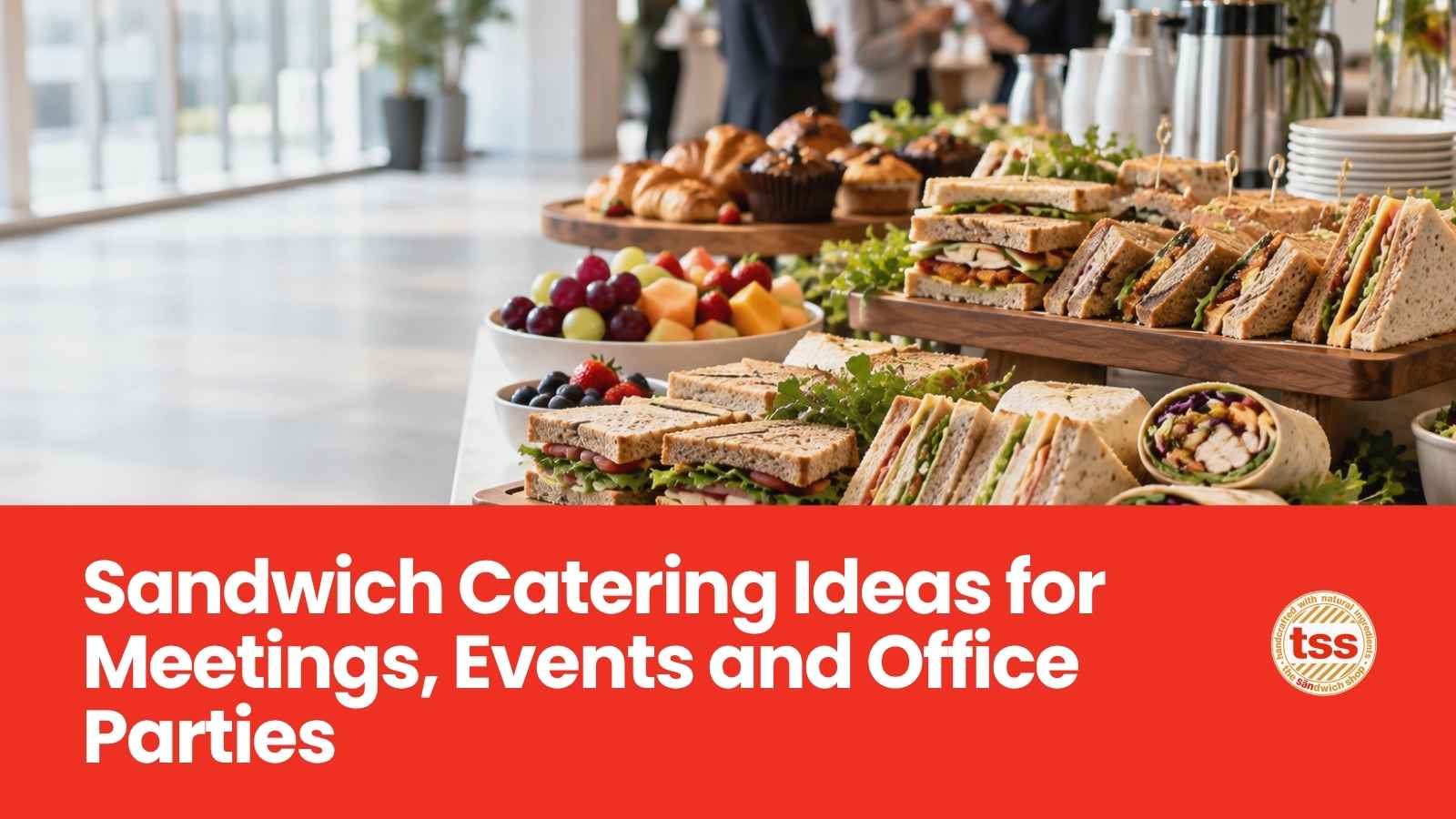
Sandwiches are a good choice for meetings, office parties, team lunches, or corporate events because they are easy to portion, simple to serve, and flexible enough to suit different preferences.
The challenge is to create a spread that feels diverse without making the setup overly complicated. By carefully selecting the fillings, bread, side dishes, and how you serve the sandwich, you can make a sandwich lunch feel well-organised and appealing.
When you’re looking for sandwich catering ideas, start with the occasion, the number of guests, and how you want the food served.
Choose Sandwiches for the Occasion
Different events require different catering.
For Business Meetings
Select sandwiches that are easy to eat while talking or working. Neatly cut sandwiches, wraps, and standard fillings work well when guests are short on time.
Individual portions or boxed meals are also easier to distribute, especially when everyone needs to eat at about the same time.
For Office Parties
At an office party, you can offer a wider variety of options. Mix different sandwich fillings with fruit, pastries, or small snacks so guests can build their own plates.
For Corporate Events
Big events offer a greater variety and a well-organised display. Offering a variety of sandwich plates gives guests plenty of choices without the need for a full buffet.
If you’re looking for convenient sandwich and breakfast choices in Singapore, then take a look at The Sandwich Shop.
Build a Varied Sandwich Menu
A lengthy list of fillings isn’t necessary; three or four different ones will give guests a good variety.
Consider including:
- One familiar or classic filling
- One chicken, meat, or seafood option
- One substantial vegetarian option
- One lighter or fresh option
Focus on contrast rather than quantity. If one sandwich is rich or creamy, pair it with a fresher filling. If most options include meat, make the vegetarian one substantial enough to serve as a main course.
Offer Different Bread Options
You can add bread variety without a completely new menu.
Depending on your guests and the type of event, you might want to choose white bread, wholemeal bread, multigrain bread, or wraps.
To ensure a meal is nutritionally balanced, the Health Promotion Board of Singapore suggests using a plate that includes wholegrains, protein-rich foods, and plenty of fruit and vegetables. Use the My Healthy Plate advice to plan different sandwich combinations and side dishes.
Add Simple Sides
You don’t need a long list of sandwich sides. Choose a few that add freshness and variety.
Fresh Fruit
Alongside sandwiches, you can have grapes, berries, melon, pineapple and oranges.
Small Sweet Treats
Muffins, cookies, pastries, or small desserts can end the meal without giving the caterer the impression it is excessive.
Drinks
Coffee, tea, and water are sensible options for most workplace events. For a more social occasion, you might also add juice or another non-alcoholic drink.
Alongside its breakfast and sandwich items, The Sandwich Shop provides coffee. See The Sandwich Shop.
Make the Menu Inclusive
Office catering usually brings together people with a variety of preferences and dietary needs.
The menu should include at least one substantial vegetarian dish, and for guests with allergies, ask the food provider about ingredients and the risk of cross-contact rather than assuming a sandwich is appropriate.
The SFA identifies common allergens such as milk, eggs, fish, crustaceans, peanuts, soybeans, tree nuts, and cereals containing gluten. Its Food Allergy & Intolerance guidance provides further information on allergens, ingredient declarations, and preventing cross-contamination.
For food that is not prepacked, the SFA also states that food businesses should provide information generally found on food labels, such as details about allergens, if requested. See the SFA’s labelling requirements.
Choose the Right Serving Style
The serving format should suit the type of event.
Sandwich Platters
Platters suit office parties, team lunches, and social events, since guests can choose different fillings and take only what they want.
Individual Boxes
Sandwiches served individually or meals provided in boxes suit conferences and seminars; they are especially useful when participants need to eat at the same time or when table space is limited.
Mixed Platters
For large events, several smaller platters are often easier to handle than a single large display. Make sure the different fillings are clearly separated and labelled so guests can choose quickly.
Order the Right Amount
If you order too little, guests may not get enough food, but if you order too much, you create unnecessary waste.
The Singapore Food Agency advises ordering appropriate quantities and engaging licenced food caterers. Its Guidelines for Ordering Catered Meals for Functions and Events specifically address catered meals for functions and events, including those provided to office staff.
When estimating your order, consider:
- Number of guests
- Event duration
- Whether sandwiches are the main meal
- Whether other food will also be served
- Dietary requirements
A selection of different dishes in reasonable amounts is generally more useful than a large quantity of identical sandwiches.
Keep Catered Food Safe
Food safety is especially important for sandwiches that include perishable ingredients such as meat, seafood, eggs, or dairy.
The SFA has identified the temperature danger zone as 5°C to 60°C. For food not being served or eaten immediately, it advises refrigerating it as quickly as possible or keeping hot food at 60°C or above. It also says that refrigerators should be set at 4°C or below. See SFA’s guidance on temperature control.
For larger catered events, bulk preparation can create additional food safety challenges because large quantities may take longer to cool or heat evenly. SFA recommends using licenced caterers and keeping food out of the temperature danger zone when it is not being served immediately. If you are selecting a catering provider, check SFA’s list of licenced food establishments and verify that the provider has the appropriate licence for the type of food service it is carrying out.
Easy Sandwich Catering Ideas for Any Event
If you need a simple start, offer three to four sandwich types, one vegetarian option, fresh fruit, a small assortment of sweets, and drinks. For a meeting, keep the menu short and easy to eat at an office party, use shared platters and add variety for a larger corporate event, label items clearly, serve reasonable portions, and arrange the setup in an organised way.
Make Sandwich Catering Simple
Your sandwich catering ideas don’t need to be complicated. All it takes is a careful choice of fillings, suitable sides, a variety of options that include everyone, and the right serving format to suit situations ranging from a small meeting to a big office event.
The best approach is to plan with your guests in mind rather than just ordering the biggest possible range of food. Select food that is easy to serve, easy to eat, and suitable for the occasion.
If you are looking for a convenient sandwich option in Singapore, visit The Sandwich Shop to see what’s currently available.
Frequently Asked Questions
Which types of sandwiches are most suitable for office catering?
Select well-known, easy-to-manage sandwiches with a variety of fillings. Make sure that at least one substantial vegetarian option is available for guests.
How many different types of sandwiches should I order?
For a small or medium-sized gathering, three or four types should be a good starting point. Larger events may require more options depending on the number of guests and their dietary needs.
What is better, sandwich platters or individual boxes?
Platters suit social events because they let guests serve themselves, while individual boxes are more convenient for meetings, workshops, and space-limited events.
Should side dishes be included when providing sandwich catering for the office?
Yes, but keep them simple. Fresh fruit, a small sweet item, and drinks can add variety without making the menu unnecessarily large.
How should catered sandwiches be kept safe?
Follow the caterer’s food-safety instructions, and avoid leaving perishable food at room temperature unless necessary. SFA recommends keeping food outside the 5°C–60°C temperature danger zone when it is not being served or eaten soon.